
SHORT ANSWER
What buyers should know
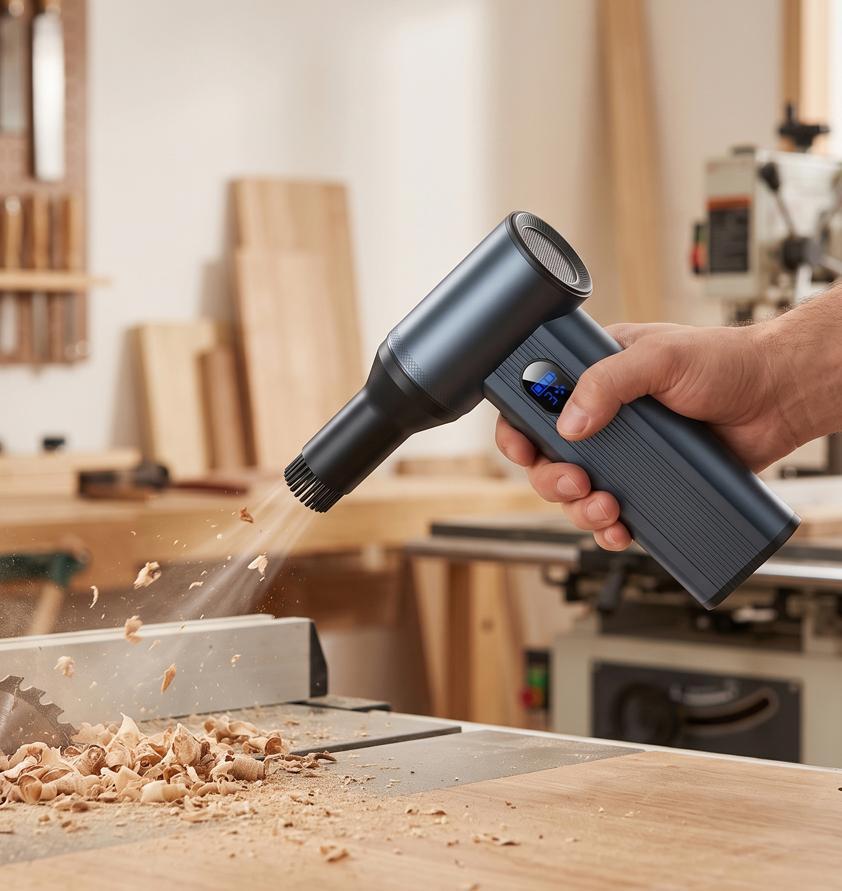
Electric air dusters are portable, rechargeable tools suited to repeated light-duty cleaning where buyers value convenience and reusable operation. Workshop compressed-air systems are better for fixed industrial stations that need sustained airflow and already have appropriate infrastructure. Disposable canned air is compact but creates recurring consumable purchases. The right choice depends on application, duty cycle, nozzle safety, runtime, noise, maintenance and destination-market requirements.
Define what ‘compressed air’ means in the comparison
Buyers often compare three different solutions under one label: a rechargeable electric blower, a facility compressor connected to hoses and nozzles, and a disposable aerosol-style duster. They do not have the same airflow behavior, operating cost, portability or safety controls. A useful procurement decision begins by separating them.
An electric air duster uses a high-speed motor and fan to create airflow. It is designed for portable intermittent cleaning. A workshop compressor stores pressurized air and can support sustained operations when correctly engineered. A disposable duster contains a propellant and is purchased again after use. No option is best for every task.
1. Match the tool to the cleaning application
List the surfaces, debris and working environment before discussing speed or power. Electronics keyboards, vehicle interiors, camera accessories, workshop benches and production fixtures present different risks. Fine dust may need controlled extraction rather than simply being moved. Delicate components may require distance, angle and electrostatic precautions.
For consumer and mobile applications, electric dusters can provide a practical balance of portability and repeated use. For a fixed factory process with long continuous cycles, a properly managed compressed-air system may be more appropriate. If the task involves hazardous dust, contamination-sensitive areas or personnel cleaning, obtain a site-specific safety assessment instead of treating the purchase as a simple tool substitution.
2. Compare airflow with a repeatable method
Marketing frequently mixes motor speed, air velocity, pressure and airflow. These are not interchangeable. A high motor-speed claim alone does not describe useful cleaning performance. Nozzle geometry, air path, battery voltage under load and control logic all affect the result at the work surface.
Ask an electric air duster manufacturer to define the measurement distance, nozzle, mode, battery state and instrument. Include a practical application test using representative dust or debris. For workshop air, evaluate regulated pressure and usable flow at the tool, including hose and nozzle losses. Procurement comparisons should focus on the result and duty cycle, not the largest isolated number.
3. Evaluate duty cycle, runtime and thermal control
An electric duster is typically used in repeated bursts or limited continuous periods. Confirm runtime by power mode and ask how the unit behaves as the battery discharges or temperature rises. A responsible factory test should include repeated operating cycles, charging, switch durability and temperature monitoring under defined conditions.
A workshop compressor can run longer but transfers complexity to the facility: compressor capacity, receiver, moisture control, filtration, hose management, noise and maintenance. Disposable dusters do not require charging, yet their useful duration is finite and performance can change during discharge. Compare the total workflow, not just the handheld device.
4. Consider safety and operator control
Airflow can propel chips and dust toward eyes, skin or adjacent equipment. Nozzle design, guards, working distance and personal protective equipment matter. In the United States, OSHA states that compressed air used for cleaning purposes must be reduced below 30 psig under the specified static conditions and used with effective chip guarding and personal protective equipment. This requirement concerns workplace compressed-air cleaning; it should not be misrepresented as a universal performance specification for electric dusters.
For an electric product, review unintended activation prevention, control response, nozzle retention, accessible-surface temperature, battery protection and clear instructions. The final safety assessment depends on the product, application and market. A supplier should provide evidence for the selected configuration rather than make blanket claims.
5. Compare ownership and sustainability factors
Electric dusters replace repeated consumable purchases with a rechargeable product, but they still have a battery, electronics and an eventual end of life. Workshop compressed air requires energy and maintenance at the facility. Disposable dusters have a simple entry cost but recurring procurement, storage and disposal considerations. The correct financial comparison uses expected cleaning frequency, operating life and local energy and waste arrangements.
Ask how filters, nozzles and batteries are serviced or replaced where applicable. Packaging volume, spare-parts policy and warranty handling also influence distributor economics. Avoid unsupported environmental claims; document the actual material, energy and replacement assumptions used in any comparison.

6. Build the right OEM electric air duster specification
An OEM brief should identify target application, desired modes, control style, charging interface, runtime expectation, noise priority, accessories, color, logo and packaging. Explain whether the product will be sold to consumers, professional users or both. This allows the supplier to recommend an existing platform or identify development work.
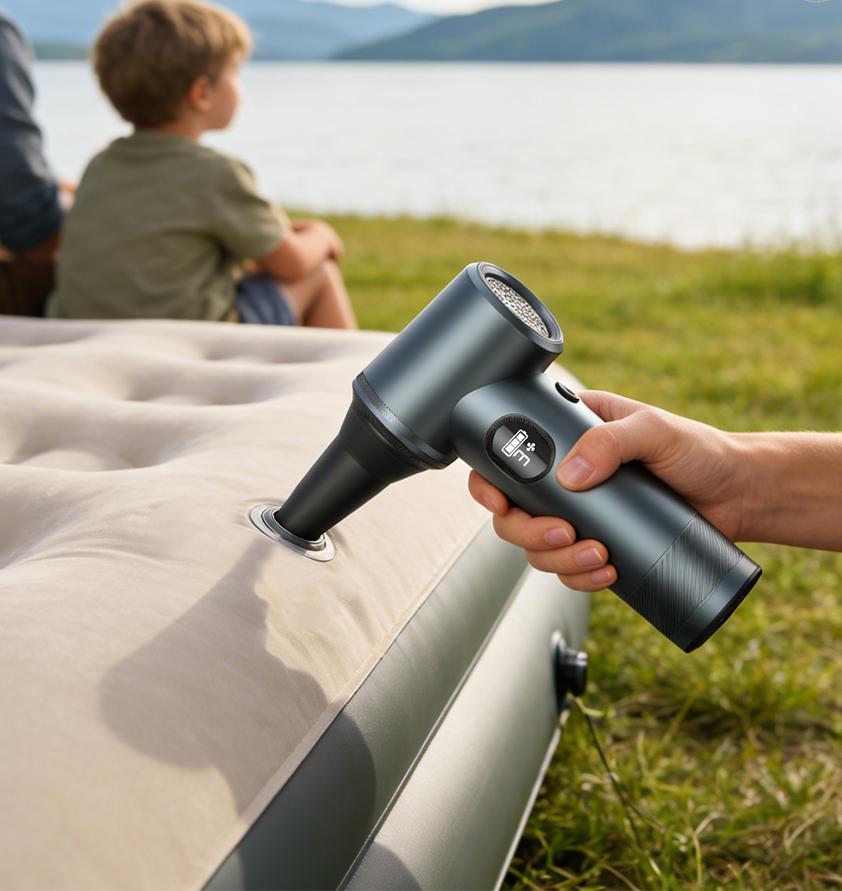
Accessories deserve particular attention. A narrow nozzle can concentrate airflow; a brush can help dislodge debris; an inflation adapter may serve a different use case. Every included part should be checked for fit, retention and labeling. Do not add attachments merely to increase the accessory count if they confuse the intended application.
7. Validate the product before mass production
Create an approval plan with appearance, function and packaging checkpoints. Functional validation can include airflow comparisons, runtime by mode, noise under a defined setup, repeated controls, charging, thermal behavior, nozzle retention and drop or transport-related packaging checks. The method and acceptance criteria should be agreed before the pilot build.
During shipment inspection, confirm the exact battery, charger or cable, accessories, labels, manual, carton marks and product operation. Retain signed golden samples and controlled artwork. When customer requirements change, update the specification and test plan so production does not rely on informal messages.

8. Select the solution using a buyer scorecard
Score each option against application fit, portability, duty cycle, operator control, infrastructure, maintenance, total cost and marketability. An electric air duster usually scores well where buyers need a reusable portable product. Workshop compressed air scores well in controlled fixed installations. Disposable dusters may remain relevant for infrequent, specialized or highly portable use, depending on local rules and customer expectations.
For an OEM program, add supplier criteria: engineering response, test capability, battery documentation, quality controls, accessory management, packaging execution and change control. The product decision and supplier decision are related but not identical.
Write an application-led validation plan
Begin with representative cleaning tasks rather than laboratory numbers alone. Define the surface, debris, working distance, nozzle, operating mode and completion criterion. Keyboard, vehicle-vent and workshop-bench trials may reveal different strengths. Photograph the setup and retain reference debris or fixtures so later samples can be compared under similar conditions.
Connect application trials to instrumented checks. Record runtime by mode, airflow or velocity under a defined method, noise at a stated distance, accessible temperature and battery behavior. Test several units rather than selecting the best sample. If the product reduces power or stops to protect itself, document the condition and recovery behavior instead of hiding it.
Packaging belongs in the plan. Confirm that nozzles do not scratch the product in transit, controls are protected against unintended activation and cables remain in their assigned locations. A shipment can pass functional inspection and still disappoint customers if packaging causes cosmetic damage, missing parts or confusing setup.
Approve only claims supported by evidence
Before approving packaging or marketplace copy, map every measurable claim to a test method and the exact model. Do not translate motor speed into an unsupported statement about pressure or cleaning result. Avoid absolute words such as silent, maintenance-free or safe for all electronics. Application guidance should explain distance, debris control and environments that require extra care.
If the product is compared with disposable canned air, state the basis. Reusability is clear when a device is rechargeable, but lifetime-cost and environmental conclusions depend on usage, product life, local electricity and disposal. Qualified and transparent wording is more trustworthy to distributors and more defensible across markets.
Keep manuals, product pages and packaging aligned. If one channel describes a different runtime, accessory or charging input, customers and inspectors receive conflicting information. A controlled claim sheet should record approved wording, supporting evidence, region and revision.
Manage launch feedback and repeat orders
For the first production order, review pilot findings before volume assembly. Monitor component readiness, battery lot identity, cosmetic standards, control operation and packing. Define what the factory may rework, what requires buyer approval and how reworked units are retested before release.
After launch, categorize returns and customer questions. Weak airflow may reflect an application mismatch, blocked air path, low charge or a true product fault; the investigation should distinguish them. Retain lot and shipment records so recurring complaints can be traced. Clear photos, videos and sample identifiers speed communication with the factory.
Before a repeat order, review complaint data, improvements and proposed component changes together. Update golden samples and inspection criteria after approval. This disciplined cycle turns a one-time private-label purchase into a controlled and continuously improving product program.
How to move from online research to a qualified RFQ
Online research should narrow the decision, not replace product definition. Convert the questions raised in this guide into a short requirements document. Label every item as mandatory, preferred or open to recommendation. Include the destination market, sales channel, customer application, forecast range, target launch window and the evidence required before approval. This gives a manufacturer enough context to recommend a platform without pretending that every detail is already fixed.
Invite the supplier to identify conflicts and trade-offs. For example, a request for smaller size, higher output, lower noise, longer runtime and lower price may not be achievable at the same time. A technically useful response explains which component or design choice affects each outcome. Record the agreed priority order so later sample changes are judged against the same commercial goal.
When quotations arrive, normalize inclusions and exclusions. Confirm configuration, accessories, branding, packaging, inspection, reports, trade terms and payment milestones. Ask which values are measured, which are typical and which remain subject to sample validation. A clear RFQ process reduces the temptation to choose a supplier using a unit price that describes a different product.
How to verify a pilot build and shipment
Before pilot production, hold a documented readiness review. Confirm that the bill of materials, appearance standard, artwork, software or controls, work instructions, test criteria and packaging files all point to the approved revision. Identify any temporary pilot material and prevent it from being mistaken for the production configuration. Define the sample quantity and the evidence that will be returned to the buyer.
During the build, inspect the process as well as finished units. Observe component handling, fastening, wiring or sealing where applicable, functional checkpoints and segregation of failures. Review whether test instruments are suitable and within their control period. If defects appear, record the actual failure mode, suspected cause, containment and retest method. A pilot is valuable because it reveals process risk before the full quantity is exposed.
For shipment release, use an agreed inspection plan based on the signed specification, golden sample and packaging files. Verify sampled function, appearance, accessories, labels, manuals, retail packaging and shipping marks. Record lot identity and retain evidence. Inspection does not prove every unit is perfect, but when combined with process control it provides a defensible decision and a traceable baseline for any later claim.
Practical conclusion
Electric air dusters are not simply ‘more powerful canned air,’ and compressed-air systems are not automatically the right reference for a portable consumer product. Define the task, measurement method and duty cycle first. Then compare complete workflows and verify the selected product with factory testing and shipment inspection.
Certification availability depends on the selected model, configuration and destination market. Please contact us for the applicable certificate or test report.
FAQ
Frequently asked buyer questions
Is an electric air duster better than canned air?
It can be better for repeated portable cleaning because it is rechargeable and does not require a new can after use. Canned air may still suit infrequent or specific tasks. Compare application, control, runtime, storage and local requirements.
Can motor RPM be used to compare electric dusters?
Not by itself. Useful performance also depends on fan design, air path, nozzle, battery behavior and measurement conditions. Ask for a repeatable airflow or application test.
Does OSHA’s 30 psi rule define electric duster power?
No. The cited OSHA requirement concerns compressed air used for workplace cleaning under specified conditions. It should not be used as a general electric-duster performance claim.
What should be tested before an OEM order?
Agree on airflow or application performance, runtime by mode, controls, charging, temperature, noise setup, nozzle retention, appearance, accessories, labels and packaging checks for the chosen configuration.
Can all models use the same compliance documents?
Certification availability depends on the selected model, configuration and destination market. Please contact us for the applicable certificate or test report.
Sources and further reading
External sources support regulatory or safety-related context. Product selection remains model-, configuration- and market-specific.